A3S56D40FTP PDF Datasheet – 256M Double Data DRAM

Part Number: A3S56D40FTP

Function: 256M Double Data Rate Synchronous DRAM

Package: TSOP 66 Pin Type

Manufacturer: Zentel

Images:

Zentel A3S56D40FTP

Description

A3S56D30FTP is a 4-bank x 8,388,608-word x 8bit, A3S56D40FTP is a 4-bank x 4,194,304-word x
16bit double data rate synchronous DRAM , with SSTL_2 interface. All control and address signals
are referenced to the rising edge of CLK. Input data is registered on both edges of data strobe ,and
output data and data strobe are referenced on both edges of CLK. The A3S56D30/40FTP achieves
very high speed clock rate up to 250 MHz.

SDRAM stands for Synchronous Dynamic Random-Access Memory. It is a type of volatile computer memory that is commonly used in modern computers, including desktops, laptops, and servers. SDRAM is a significant improvement over its predecessor, asynchronous DRAM (often referred to as “SDR SDRAM” for Single Data Rate Synchronous Dynamic RAM), due to its higher speed and synchronous operation with the system’s clock.

Features

1. Double data rate architecture ; two data transfers per clock cycle.

2. Bidirectional , data strobe (DQS) is transmitted/received with data

3. Differential clock input (CLK and /CLK)

4. DLL aligns DQ and DQS transitions with CLK transitions edges of DQS

5. Commands entered on each positive CLK edge ;

6. Data and data mask referenced to both edges of DQS

7. 4 bank operation controlled by BA0 , BA1 (Bank Address)


3 page
A3S56D40FTP pdf datasheet

Other data sheets are available within the file: A3S56D30FTP

A3S56D40FTP PDF Datasheet

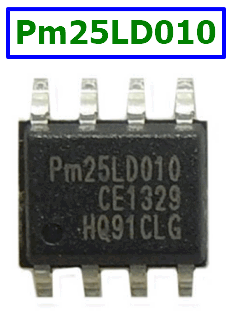
Pm25LD010 PDF Datasheet – 1 Mbit, Serial Flash Memory

This post explains for the Flash Memory.

The Part Number is Pm25LD010.

The function of this Flash Memory is 1 Mbit Serial Flash Memory.

The package is SOIC 8 Pin Type

Manufacturer: Chingis Technology

Image

Pm25LD010 PDF Datasheet

Description

The Pm25LD010 is 1Mbit Serial Peripheral Interface (SPI) Flash memories, providing single- or dual-output. The devices are designed to support a 33 MHz clock rate in normal read mode, and 100 MHz in fast read, the fastest in the industry. The devices use a single low voltage power supply, wide operating voltage ranging from 2.3 Volt to 3.6 Volt, to perform read, erase and program operations. The devices can be programmed in standard EPROM programmers.

Serial Flash Memory is a type of non-volatile memory that stores data using a serial interface instead of a parallel interface. It is also commonly referred to as Serial NOR Flash. Unlike parallel flash memory, which transfers data in parallel over multiple data lines, serial flash transfers data serially, bit by bit, over a single data line.

Serial flash memory is commonly used in a wide range of applications, including consumer electronics, automotive systems, and industrial and medical devices, due to its compact size, low power consumption, and fast read and write speeds. Some popular serial flash memory products include the Serial Peripheral Interface (SPI) NOR Flash and the Three-wire Serial NOR Flash.

2 page
Pm25LD010 Flash Memory

Features

1. Single Power Supply Operation – Low voltage range : 2.3 V – 3.6 V

2. Serial Peripheral Interface (SPI) Compatible

(1) Supports single- or dual-output

(2) Supports SPI Modes 0 and 3

(3) Maximum 33 MHz clock rate for normal read

(4) Maximum 100 MHz clock rate for fast read

3. Low Power Consumption

(1) Typical 10 mA active read current

(2) Typical 15 mA program/erase current

Other data sheets are available within the file: Pm25LD512, Pm25LD020, Pm25LD040

Pm25LD010 PDF Datasheet

Posts related to ‘ Flash Memory ‘

Part number Description
25P10AV 1 Mbit, Serial Flash Memory
H27U2G8F2C 2 Gbit NAND Flash Memory
25Q80A 8Megabit Flash Memory – EN25Q80A
H27UCG8T2ETR 64Gb MLC NAND Flash Memory
AM29LV020BT 2 Megabit Flash Memory – AMD
25Q80BSIG 8M-bit Serial Flash Memory
K5L5563CAA-D770 256Mbit NOR Flash Memory
25Q80ASSIG 8 Megabit Serial Flash Memory
25L8005 8M Bit CMOS Serial Flash Memory
M28F101 1Mb (128Kx8, Chip Erase) Flash Memory


Related articles across the web